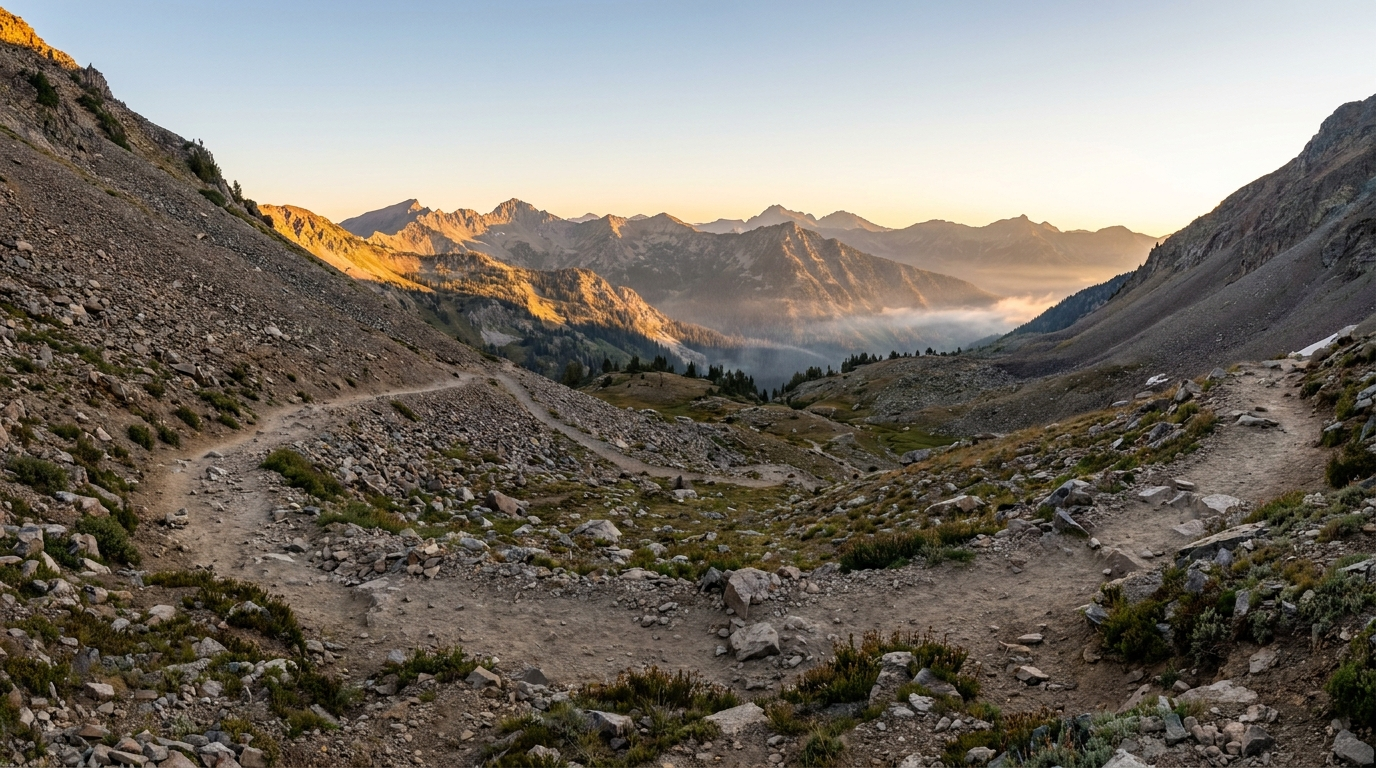
Archery elk season opens the first week of September across most of the West, which puts mid-July at almost exactly eight weeks out. That's not a lot of time to build the kind of fitness that a 10,000-foot basin demands, but it's enough time to matter — if you stop treating "getting in shape" as a vague New Year's-style intention and start treating it as a training block with a hard deadline.
Eight weeks is the minimum, not the ideal. Twelve to sixteen weeks builds a deeper aerobic base and lets your joints adapt gradually to load instead of all at once. But plenty of hunters start exactly where you're starting right now, and plenty of them still kill elk. The difference between a good eight weeks and a wasted one comes down to what you actually train, not how hard you go the first week.
What backcountry hunting actually demands from your body
Most fitness advice aimed at hunters gets recycled from general athletic training — run more, lift more, do some cardio. That's not wrong, exactly. It's just aimed at the wrong problem. Elk hunting doesn't ask you to sprint or to max out a bench press. It asks you to carry 30 to 50 pounds uphill for hours at elevation, then carry more than that back down a steep, loose-rock slope with a boned-out quarter strapped to your pack frame. Your legs, your lungs, and your midsection take that load. Everything else is secondary.
The uphill part gets most of the attention because it's the part people fear. The downhill part is where knees actually break down. Descending a steep grade under a heavy pack loads your quads eccentrically — the muscle lengthening under tension instead of shortening — and that's a fundamentally different demand than the concentric strength most gym programs build. Skip it in training and you'll find out about it on day three of the hunt, usually around the time your legs stop responding the way they did on day one.
Rucking is the one thing with no real substitute
Ask around in elk hunting circles and one piece of advice comes up more than any other: ruck. Load a pack, put it on your back, and walk uphill. There is no exercise that replicates the specific demand of carrying weight over broken ground for hours, and no amount of treadmill incline fully substitutes for the stabilizer work your ankles and hips do on a real trail.
A reasonable starting point is two ruck sessions a week, beginning around 30 to 40 pounds, and varying the load, distance, and terrain from week to week so your body doesn't adapt to one specific stimulus and plateau. If you live somewhere flat, a stadium, a parking garage ramp, or a steep local park hill will do more good than another flat five-mile walk. The goal isn't distance — it's time under load on an incline, which is the actual thing you'll be doing in September.
The pack you ruck with should be close to the one you'll hunt with, loaded roughly the way you'll load it for a pack-out. If you're still shopping, Forloh's Method pack system is worth a look — it's built specifically around this kind of hauling, and packs are one of the categories running deep discounts right now, so it's a reasonable time to buy before the season crunch. Our current pack deals are worth a scan either way, and the pack guide gets into frame and volume decisions in more depth than fits here. For the brand specifically, Forloh's current lineup is a good place to start.
Step-ups, step-downs, and the leg work that actually transfers
Weighted step-ups onto a box or a sturdy bench, done one to three times a week starting around two months out, are one of the more efficient single exercises for building the specific leg strength a mountain hunt demands. They mimic the exact motion of climbing a switchback, and they scale easily — start with body weight, add a weighted pack or dumbbells as you adapt.
The mirror-image exercise matters just as much and gets skipped far more often: step-downs, single-leg squats, and walking lunges, which train the eccentric strength that controls a steep descent. Train the up and skip the down and you've prepared for maybe half of the actual terrain. Round out the two with general strength work — squats, deadlifts, and overhead presses — to build the posterior chain and core stability that keeps you upright when a pack shifts or a footing gives out mid-stride.
Build the aerobic base on the days you're not rucking
Rucking and leg strength cover the mountain-specific demand, but they don't fully build the aerobic engine that lets you keep functioning at altitude on hour six of a stalk. On your off days, put in longer, steady-state aerobic work — trail running, cycling, or fast hiking on lower-angle ground, sustained for an hour or more at a conversational effort. This is the unglamorous part of the plan and the part people cut first when time gets tight. Don't. It's what keeps you clear-headed and functional deep into a long day, not just strong enough to survive the first climb.
Altitude: what training fixes and what it doesn't
If you live below 5,000 feet and you're hunting a unit at 9,000 or above, no training program erases that gap entirely. Getting as generally fit as possible — strong legs, a solid aerobic base, low body fat relative to your frame — narrows the gap more than anything specific to "altitude training." If your schedule allows it, arriving two or three days before opening morning gives your body a real head start on acclimating; even that short a window measurably helps with sleep quality and exertion tolerance at elevation. There's no shortcut that replaces simply showing up in better shape than you were last year.
The mistakes that show up most
The most common one is starting too heavy, too fast. A hunter who hasn't rucked all summer straps on 60 pounds for a five-mile hike in week one and spends the next ten days recovering instead of training. Progressive overload exists for a reason — start lighter than you think you need to, and add weight or distance every week or two instead of all at once.
The second mistake is training everything except your feet. Your boots need break-in time just as much as your legs need conditioning time, and a blister on day two of a nine-day hunt can end the trip as fast as a blown-out knee. If you're on your last season with a pair that's already lost its support, now — not the week before you fly out — is when to replace them. The boot buying guide covers fit and stiffness trade-offs for mountain terrain, and it's worth pairing new boots with a few rucks before opening day so you're not breaking them in on the mountain itself. Check current boot deals while you're at it.
The third is training in gear you won't actually wear. If you're planning to hunt in a specific technical pant or layering system, ruck in it a few times so you know how it handles sweat and movement on a real climb, not just how it looks on a hanger. Beyond Clothing's Back Country line is built around exactly that kind of backcountry use, and it's one of the brands currently discounted — a reasonable time to build out a kit before prices come back up in August. See their current stock at Beyond Clothing's page.
A realistic eight-week structure
You don't need a rigid, color-coded spreadsheet to make this work. A simple rotation covers the bases:
- Two ruck sessions a week, increasing weight or distance roughly every other week
- One or two dedicated leg-strength sessions mixing step-ups, step-downs, and general lifts
- One or two longer, steady aerobic sessions on non-ruck days
- A short taper in the final week — reduce volume, keep intensity light, let your legs arrive fresh instead of trashed
Hydration matters more than people plan for, too. Training at volume in July and August heat dehydrates you faster than the cooler temperatures you'll actually hunt in, so get in the habit of carrying and using a bladder or filter system on every long training day. It's a small thing that prevents a miserable one. A trekking pole system is worth adding to the same training sessions if you'll use one in the field — it changes your gait and balance enough that it's worth practicing with, not discovering on the mountain. Both are covered in our accessories deals.
None of this guarantees a filled tag. Elk hunting has too many variables outside your control for any training plan to promise that. What eight weeks of honest work does guarantee is that when the moment actually arrives — bull screaming back at 300 yards, and you need to close the distance fast over broken ground — your body does what you ask of it instead of what it's capable of after a summer on the couch. Start this week. Check today's deals while you're building out the kit, since the gear side of this prep is worth handling early too.