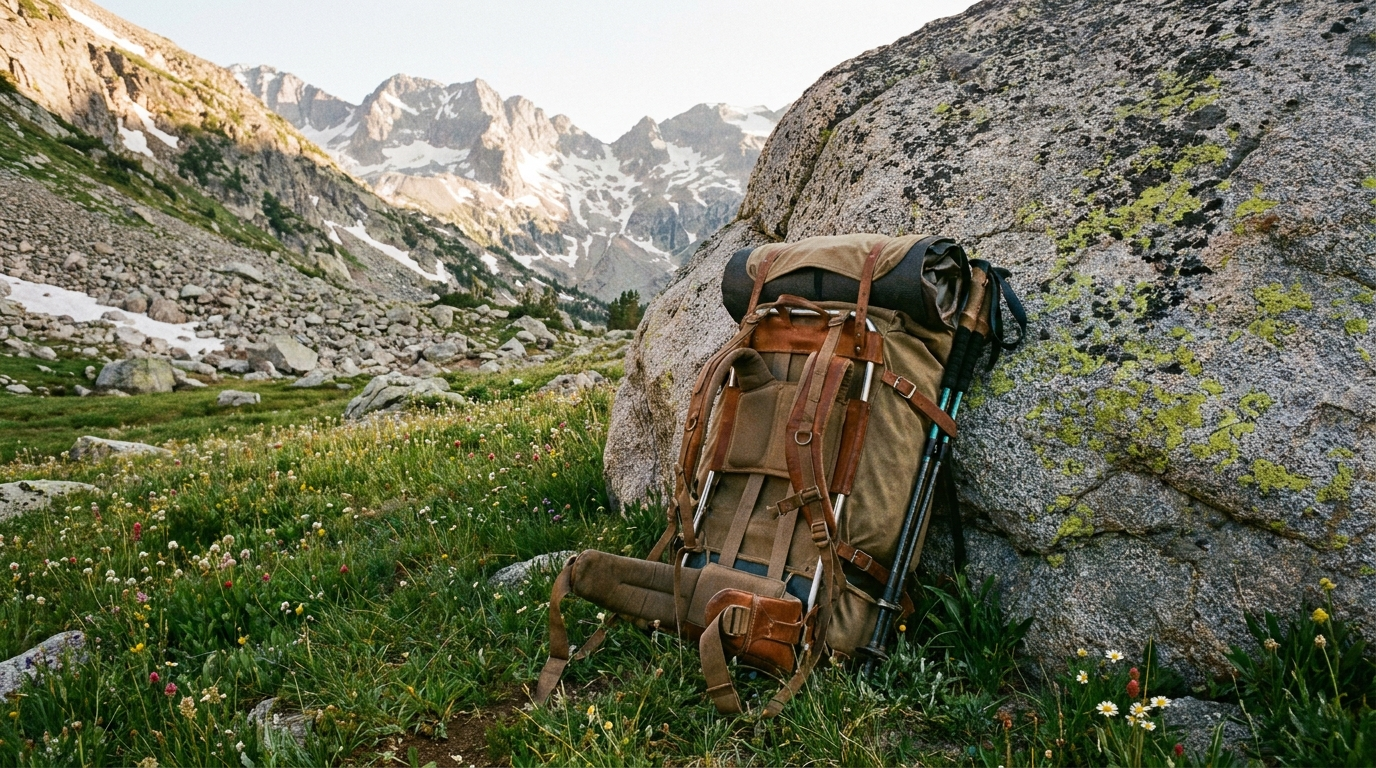
Pack selection is where a lot of western hunting seasons go sideways before the truck ever leaves the driveway. The wrong volume makes you either leave things behind or carry a half-empty bag that shifts and wallows. The wrong frame turns a manageable sidehill into a wrestling match. And a pack that doesn't fit your torso transfers weight to your shoulders all day instead of your hips — the difference between arriving at the ridge tired and arriving at the ridge done.
Most buyers evaluate packs by liter count and brand name. That's the wrong order. The decision is: hunt type first, then fit, then frame, then features.
Match the Pack to the Hunt You're Actually Doing
Three scenarios drive most western hunting pack decisions, and they have meaningfully different requirements.
Day hunts and spot-and-stalk keep you close enough to the truck or camp that you're not sleeping in the field. Everything you need fits in 20-40 liters: water, a layer or two, food, rangefinder, calls, first aid, and whatever licenses and harvest materials you're required to carry. A frameless or minimal-frame pack handles this fine. The catch: if you connect on an elk four miles from the rig, your day pack becomes someone else's problem. Most hunters in this situation either run a separate meat haul setup — a bare frame kept at camp — or plan a trip back on foot to the truck. Know which one you're doing before you leave.
Spike camp and 2-4 night hunts change the math entirely. Add a shelter, a sleep system, three or four days of food, camp shoes, and the extra layers a mountain night demands. You're solidly in the 45-65 liter range, and now you need a real frame. You're covering miles loaded and then covering them again loaded heavier on the way out.
Extended backcountry hunts — 5+ days don't require as much volume as people think. The hunters who show up with 90-liter packs for a 7-day elk hunt are usually carrying three or four items they'll never touch. A disciplined 65-75 liter system handles a week of self-supported western hunting if you've edited your kit ruthlessly. Go bigger than 80 liters only after you've pulled every redundant item and still can't close the bag, or if you're genuinely expecting to haul multiple quarters over multiple trips with no help coming.
Frame Types and When Each One Wins
This is the decision that most buying guides rush past.
Frameless packs exist for a real use case: hunters who've refined their kit below 35 lbs and want to move fast and light. Sub-30 liter frameless bags work well when you're hunting close to camp and handling meat retrieval separately with a dedicated hauler. Load a frameless bag much past 40-45 lbs and it collapses against your back. Airflow disappears. The weight drops to your lower lumbar instead of transferring through a hipbelt to your legs, and every sidehill step becomes a balance fight. If there's any meaningful chance you're packing out meat from where you hunt, a frameless bag is the wrong tool for that job.
Internal frame packs are where most western hunters should be. A good internal frame keeps the load close to your center of gravity, which matters on the terrain where elk live: long sidehills, scree slopes, steep drainages. The frame wraps to your body's contours rather than sitting out behind you, and quality aluminum stays — the two vertical rods inside the frame — can often be shaped to match your spine curvature. This is where Forloh's Method system sits. The Method 4400 Pack Body runs as a modular system with a separate frame that adapts across hunt types. It routinely shows one of the deeper markdowns in the pack listings — real money back for a system designed specifically for western hunting conditions, and that kind of price doesn't sit around long.
External frame packs have carved a niche back into western hunting for one specific reason: raw meat hauling capacity. A bare external frame with a load shelf can carry enormous weight and does it efficiently on maintained trail. The tradeoff is technical terrain. External frames want to pull away from your center of gravity on steep sidehills, where you're constantly adjusting your lean into the slope. If your pack-out involves long stretches of off-trail, rough terrain, an internal frame handles that movement more cleanly. If you're on decent trail the whole way out, an external frame can carry more weight with less structural complexity.
The Two Fit Variables That Actually Matter
You can spend $700 on the right pack and ruin the purchase with the wrong fit.
Torso length — not your height. Measure from the C7 vertebra at the base of your neck (the knob that sticks out when you tilt your head forward) down to the top of your iliac crest, the bony shelf at the top of your hips. That's your torso length. Most pack manufacturers size their frames off this number, with S/M/L/XL typically mapping to ranges between 15 and 22 inches. A frame built for a 20-inch torso on a 17-inch torso rides too high, shifts weight off your hips and onto your shoulders, and will leave you wondering why your neck hurts by noon.
Hipbelt fit is where the load actually goes. When a pack fits right and is loaded correctly, roughly 70-80% of the weight transfers through the hipbelt to your hips and legs, not your shoulders. The hipbelt should sit centered on your iliac crest, with the padded wings wrapping around the bone so they can cradle it. Buckle the hipbelt first, snug it until you feel the weight settle down off your shoulders, then adjust the shoulder straps so they contour your shoulders without gap. Then pull the load lifters — the short straps angling from the top of the frame to the tops of the shoulder straps — to bring the pack's center of gravity up and toward your body.
Test this at home with 45 lbs of dead weight before the season. If the load is still riding on your shoulders after all adjustments, the frame doesn't fit your torso. Find that out at the gear shop, not at 10,000 feet.
What the Pack Has to Do When You Kill
This is the moment most buyers don't think about until they're standing over a dead elk with no good system for moving 150 lbs of meat across three miles of rough country.
A few things matter specifically for meat hauling:
- The frame's rated capacity matters less than how the load transfer system is built. A well-constructed frame and hipbelt rated for 70 lbs carries that number differently than a budget system claiming the same spec.
- Keep the meat high and close to the frame. Meat lashed to a load shelf or tied above the bag body keeps the weight's center of gravity near yours. Let it sag to the bottom of the pack and you're fighting physics with every uphill step.
- Quarters with hide on are bulkier and harder to compress than boned-out meat in game bags. If you're going that route, a frame with external lashing capacity handles it better than a bag-only design.
Some hunters run a dedicated meat hauler — a bare frame kept at camp — and hunt with a smaller bag. That works if your camp logistics support it. For hunters who want one system for both jobs, the frame needs to genuinely handle heavy loads and you need to have practiced loading it heavy before the hunt, not the morning after you kill.
What Not to Spend Time Worrying About
Camo pattern. Your pack isn't in front of the animal when it counts — you are. A muted solid (gray, olive, tan) matters more than which specific pattern is printed on the fabric. No pack color is going to blow your stalk if your approach is solid.
External pocket count. A dedicated hipbelt pocket for a rangefinder or snacks is genuinely useful. Six zippered external compartments is organizational complexity that adds weight without adding function. The more serious hunters I know have migrated toward simpler external organization, not more of it.
Weight savings in the frame. Shaving 4 ounces off the frame to hit a lighter total weight almost always means compromising the structure that makes heavy loads bearable. Weight reduction matters in a hunting pack — it matters more in what you put inside it than in the frame and hipbelt holding it up.
Current Pack Deals Worth Checking
Pack prices hold high year-round, which makes real off-season discounts meaningful. The current pack deals at Timberline regularly include the Forloh Method 4400 Pack Body at a serious discount — a system built for western hunting conditions. See all current Forloh deals if you're shopping that ecosystem.
For the rest of your western hunt kit — optics, insulation, base layers — browse all current deals and build from there.