Archery elk season opens across most of the West in four to five weeks, and if this is your first DIY public-land hunt, the honest odds are not good. Public-land OTC archery success for first-time nonresident hunters routinely sits in the single digits, and even resident hunters on unfamiliar ground land closer to 11-15 percent. Those numbers climb hard with repetition — hunters working the same unit for a third season report success rates two to three times higher than year one. That gap is experience, not gear, and it should change how you spend the money you have left before the opener.
Most late-summer buying guides push the same move: upgrade the binoculars, upgrade the pack, buy the boots everyone's talking about. That's backwards for a first-year hunt. The premium optics and the broken-in pack matter more on your third trip into a unit than your first, once you already know you're coming back. What actually strands a first-timer isn't a mediocre binocular — it's the boring stuff nobody budgets for: a dead headlamp on the walk out, no way to purify water when the filter clogs, meat with nowhere clean to go.
The math nobody runs before buying glass
Run the numbers honestly. A nonresident elk tag, fuel, and a week of vacation already represent a real investment before a single item of gear gets bought. Layering a $1,500 binocular purchase on top of that, for a hunt with a realistic single-digit chance of connecting, is a bet on a future you haven't earned yet. Buy the mid-tier glass. Spend the difference on the pieces of kit that keep a bad day from becoming a scrubbed hunt, and reinvest in premium optics once you've proven — to yourself, not to a gear review — that you're doing this again next year.
That reasoning only works if the "boring stuff" actually gets bought instead of skipped. Here's what it costs and why each piece earns its spot.
The gap kit: under $400, and it's the difference-maker
This isn't a full elk kit. It assumes you already own a bow or rifle, boots, a pack, and a shelter system from prior seasons or an earlier purchase. This is the short list of items first-timers consistently leave off, priced at realistic mid-range retail:
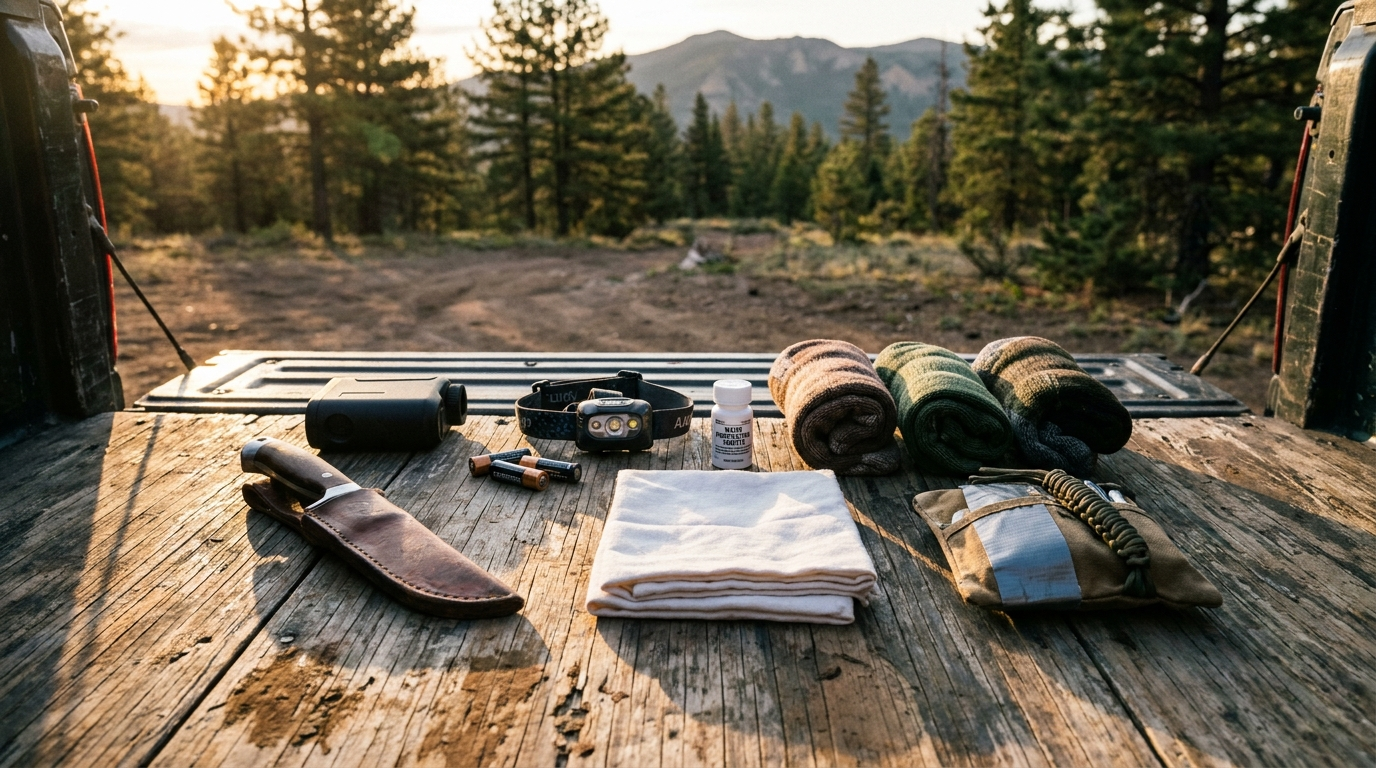
- Rangefinder, $150. Not the flagship model with ballistic compensation — a basic angle-compensating unit that reads to 600-800 yards. Misjudging a shot at elk-scale distances is the single most common reason a clean opportunity turns into a wounded animal or a clean miss. Outdoorsmans, the Arizona optics shop that guides have relied on for decades, regularly stocks take-off and demo units at a real discount off new pricing — worth checking before paying full retail on a rangefinder you'll use maybe a dozen times a season. Current optics deals are worth a look before this one gets bought at sticker price.
- Fixed-blade or replaceable-blade field knife, $55. One knife, sharp, with a spare blade or a pocket stone. Not a knife-and-multitool combo you've never actually used to break down a shoulder. A field-processing knife deal is a better use of that money than a knife you're buying for the drawer.
- Headlamp with spare batteries, sealed in a dry bag, $45. Elk camp mornings start well before legal light and packing meat out often runs well past dark. A dead primary light four miles from the truck with a bull down is a solvable problem only if the backup batteries are actually in the pack, not "somewhere at home."
- Reusable game bags, four-pack, $40. Cotton, not the paper-thin ones bundled free with a cheap knife set. Meat sitting in the field for hours before it's bagged and hung is the fastest way to waste a successful hunt.
- Water treatment backup, tablets or drops, $18. A mechanical filter is the right primary system, but filters clog, freeze, and crack. A backup that weighs nothing and takes zero maintenance solves the one failure mode that can end a hunt in a day. Anyone still deciding between filter types should read up on where squeeze filters actually fail in cold camps before betting the whole trip on one system.
- Merino wool socks, three pair, $54. Not a splurge — a rotation. Wet feet on day two of a five-day hunt is how blisters end trips that gear failure never would have. Base-layer deals this time of year usually include sock bundles worth checking before paying full price for three pair separately.
- Field repair kit, $26. Tenacious tape, a needle and heavy thread, a spare buckle, zip ties, superglue. A torn pack strap or a blown boot lace shouldn't be the reason a hunt ends early when the fix weighs two ounces.
That's $388, and it's the list that keeps a hunt running when something predictable goes wrong — not the list that makes a hunt more comfortable when everything goes right. Browse current accessories deals for the headlamp, repair kit, and game bag pieces together; most of that gap kit clusters in one category.
Priority order if $388 is still tight
Not everyone has that number free four weeks out, so here's the sequence, worst-case-first rather than alphabetical:
- Rangefinder and knife first. These are the two items where "doing without" produces a direct, immediate failure — a bad shot or a botched field job — not just discomfort.
- Water backup second. Cheap insurance against the one failure mode with no in-field workaround.
- Socks and repair kit third. These prevent slow-building problems, not sudden ones, so there's more margin to skip a purchase week and catch up before opening morning.
- Game bags last, but don't actually skip them. A contractor trash bag can limp meat home in an emergency. It's a bad answer, not a fatal one, which is why it sits at the bottom of this list and not off it entirely.
What not to buy four weeks out
New boots this close to opener are the classic mistake — there isn't enough time left to break in a stiff mountain boot before a multi-day hunt, and a blister on day one of five is worse than mediocre boots that already fit. Same logic applies to a new pack: an unfamiliar frame and untested hip belt on a heavy pack-out is the wrong place to discover a fit problem. If a pack shakedown hasn't happened yet this summer, that's worth doing before any new gear purchase gets made at all — it usually surfaces two or three items already owned that can replace something on a shopping list.
A new rifle optic or a bow upgrade four weeks out means less time behind it before the trip, not more confidence with it. Anything that requires re-zeroing, re-tuning, or new muscle memory belongs in the off-season, not the final month.
Spend where the odds actually are
None of this argues against good gear — it argues against buying it in the wrong order. A first DIY public-land elk hunt is, statistically, more likely to end in a long, educational walk than a pack-out. That's not a reason to go cheap on everything. It's a reason to spend the next four weeks on the items that keep a hard trip from becoming a ruined one, and to save the premium optics purchase for the season after this one proves you're coming back. Check the current deals before the season starts — the gap kit above is cheap enough to round out this week, and the bigger purchases can wait until there's a second trip on the calendar to justify them.