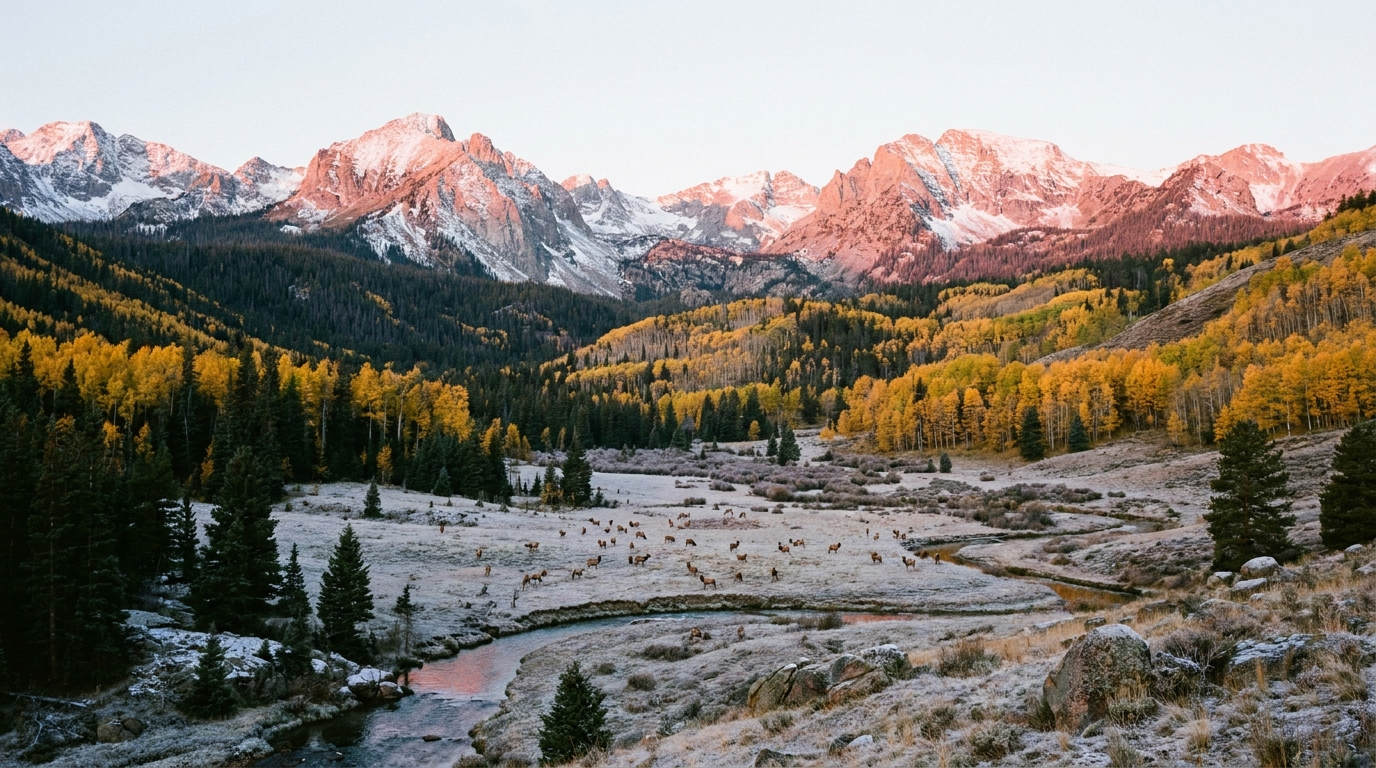
Western mountain hunting breaks most layering systems. The standard outdoor layering advice assumes a steady hiking pace or a static position — you're doing either one or the other. Mountain hunting is neither. You grind up 2,000 feet in the dark with 45 pounds on your back, then park on an exposed ridge for two hours glassing a basin with 20 mph wind coming off the Divide. Then you're moving again, fast, trying to cut off a bull before he drops into the timber.
That transition between hard exertion and motionless sitting is where systems fall apart. A soaked base layer that felt fine on the hike drains your heat the second you stop moving. A heavy mid-layer that kept you warm glassing becomes a furnace the moment you start covering ground. Get it wrong once and you're miserable for days. Get it wrong badly and you're in a genuinely dangerous situation at altitude.
Here's how a working system comes together.
Layer One: The Base Layer and the Merino vs. Synthetic Question
The base layer has one job: move moisture off your skin fast enough that stopping doesn't chill you through.
Merino wool wins for most backcountry mountain hunting. Specifically for archery elk: merino resists odor in a way no synthetic matches. Three days in a spike camp without access to laundry, and a synthetic base layer becomes a problem. Merino stays usable. More importantly, merino holds warmth when it's damp. You sweat into it, wet it out, stop moving, and you don't immediately lose heat. That buffer matters when you're glassing a cold basin at 11,000 feet.
Synthetics have a real edge on drying speed. In consistently wet conditions — Pacific Northwest Roosevelt elk, coastal Alaska — a soaked synthetic dries faster when you can wring it and let it breathe. For high-output September archery, some hunters prefer lightweight synthetic for faster moisture management when they're covering serious miles. A workable spike camp approach: run synthetic on the hard approach hike, change to a fresh merino layer before you start glassing.
Weight is the variable most hunters get wrong. Going too heavy in warm conditions is the most common base layer mistake I see. A 200-gram merino two-piece on a September elk hunt in Arizona or the Great Basin is a sweat trap within twenty minutes of climbing. For early season and hard physical output, 150g is plenty. Sometimes 100g is better. Save the heavier two-piece for late October mule deer and cold mountain goat camps where temps actually justify it.
Fit matters as much as fiber: a base layer that bunches under a pack hipbelt over a long approach will grind you raw. Buy athletic cut.
Check the base layers page for current deals: the Smartwool Classic Thermal Merino Base Layer and the Duck Camp Merino 1/4 Zip both turn up well under retail. Duckworth makes merino from a Montana mill if you want American-origin wool — worth a look.
Layer Two: The Mid Layer Lives at the Top of Your Pack
Your insulation piece is the layer most hunters get wrong — not by choosing the wrong jacket, but by how they carry it.
The mid layer goes in the top lid of your pack, or the most accessible exterior pocket you have. When you sit down on an exposed ridge at first light to glass a basin, you should have that jacket on in under 30 seconds without removing the pack. If it's buried under your sleep system and three days of food, you won't pull it out when you need it. You'll convince yourself the cold is manageable. That decision costs focus, accelerates fatigue, and shortens how long you can glass effectively before you call it and start moving again.
What to look for: a piece that compresses small, weighs 17-18 oz ideally, and layers cleanly over your base or under a shell. Packable down at 800-fill or higher is the weight-to-warmth standard for most mountain conditions. The Sitka Hudson Jacket is one of the better hunting-specific insulation pieces available, and it shows up at a real discount often enough to be worth watching. Baffled down construction, quiet face fabric that doesn't announce your presence in timber, and a cut that works under a shell without bunching.
Softshell mid layers serve a different role. On October mule deer hunts where you're still climbing significantly and temps run in the 30s and 40s, a softshell lets you keep moving without overheating the way a puffy would. It functions as active insulation when your output is high enough that you need breathability more than raw warmth. Browse both options at the current jacket deals page.
On down versus synthetic for the mid: for most western mountain hunting, down wins on packability and warmth-to-weight. Go synthetic if your environment genuinely stays wet for sustained periods. Otherwise, down.
Layer Three: Shell Layers and Why Stiff Hardshells Kill Stalks
The outer layer is where hunters over-invest and often end up with a worse hunting system.
A 3-layer Gore-Tex hardshell provides genuine waterproof protection. It also crinkles audibly when you move your arms. At full draw on a bull elk at 40 yards, that crinkle can matter. On a stalk through dry pine timber, the swish of stiff treated nylon announces you well ahead of your arrival. For rifle hunting at distance, maybe a hardshell is acceptable — you're not crawling through brush trying to get to 50 yards. For archery, a noisy outer layer can cost you the opportunity you spent three days creating.
In most of the West, real soaking rain is less common than sustained wind and fast-moving afternoon weather. A quality windshell handles the actual threat on most western mountain hunts: blocks wind, sheds light precip, lets you move without broadcasting your position. That covers the majority of conditions you'll face from eastern Oregon to the Rockies to the Basin ranges.
For legitimate rain country — Alaska moose, Pacific Northwest, the Colorado wilderness in a wet October — you need real waterproof coverage. The Outdoor Research Headwall Gore-Tex 3L Jacket handles serious weather and moves better than most stiff hardshells anywhere near its price. If the outer layer needs to do everything, it earns its spot.
For drier western conditions, the Kings Camo XKG Windstorm Rain Bundle is a packable option that covers what you'll actually face, and it's routinely one of the cheaper shells on the board. Wind, light precip, quiet enough for stalking. Browse current shell and jacket deals.
Three Scenarios, Three Systems
September archery elk: 150g merino or lightweight synthetic base layer. A light packable puffy — 100g, under 15 oz — in the pack lid for cold mornings and glassing stands. A softshell or windshell in a side pocket. Skip the heavy puffy. If you hit a cold spike at 10,000 feet, the light packable covers you. If you bring a big heavy insulation piece, you'll leave it at camp within two days because you're moving too much to use it.
October rifle mule deer, high country: 200g merino base layer. A serious down mid — 800-fill, 17 oz — in the pack lid. A softshell as your active layer for climbing. A hardshell rolled up for weather. Mornings hit 15-25°F at elevation in late October. The down stays off until you stop moving or the wind picks up hard.
Sheep or mountain goat at elevation: Plan for everything and pack it intelligently. Sustained cold, exposed ridges, wind that doesn't stop. Pit zips on both your mid layer and your outer layer are not optional here. They're how you make small heat adjustments constantly without stopping to strip layers every hour. A good high-elevation system keeps you regulating in motion, not standing on a ridge with your pack open.
The Mistakes That Actually Cost You
Dressing warm from the truck is the most common one. If you're comfortable at the trailhead, you're overdressed. You should feel slightly cool at the start. You'll be warm within fifteen minutes of climbing.
Burying the mid layer is second. It should come out in under 30 seconds without pulling the pack off. Build your pack load around that one constraint. Everything else in the pack adjusts around it.
Wearing a crinkly hardshell for archery is third, and the most painful to learn because you figure it out mid-stalk. Stiff nylon is audible at 50 yards in still air. For bowhunting, your outer layer needs soft face fabric: fleece, brushed synthetic, treated merino. Not coated nylon shell.
A layering system that works doesn't need to cost $1,500. A 150g merino base, a packable down mid, and a quality windshell is three pieces and covers the majority of western mountain hunting conditions. Build from the inside out: the base layer is on your skin all day from the pre-dawn approach to last light. Get that right first, then work outward.
Current deals across all clothing categories are at Timberline Deals.